
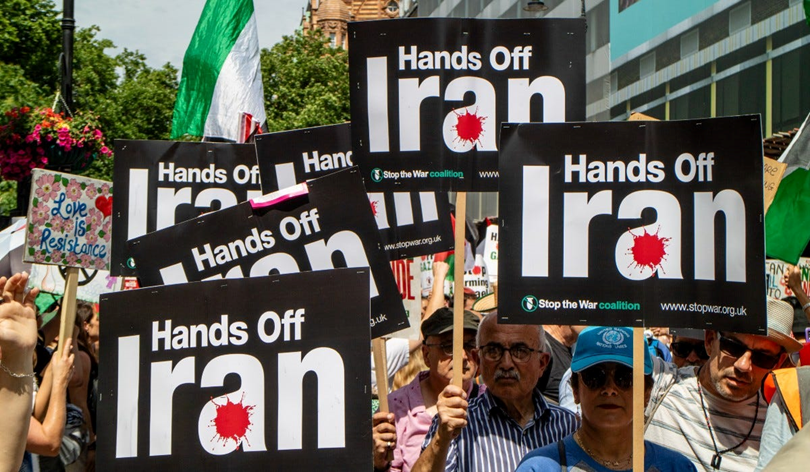
Von der iranischen Revolution bis zum Krieg gegen den Iran: Orientalismus, Imperium und die Architektur des islamophoben Diskurses
Von Dr. Hatem Bazian
8. April 2026
https://hbazian.substack.com/p/anti-iran-and-anti-shia-discourses
Islamophobie Studies Journal
Islamophobie-Studienzentrum
Zusammenfassung
Dieser Artikel argumentiert, dass anti-iranische und anti-schiitische Diskurse eine der historisch beständigsten und politisch folgenreichsten Säulen der modernen Islamophobie-Industrie darstellen. Beginnend mit der iranischen Revolution von 1979 und dem Zusammenbruch der regionalen Sicherheitsarchitektur der „Zwillingssäulen“ der Vereinigten Staaten, verfolgt der Artikel die systematische Konstruktion Irans als existenzielle zivilisatorische Bedrohung durch überlappende Vektoren; Westliche imperiale Medien, die Instrumentalisierung sunnitisch-arabischer Regime, die Mobilisierung des politischen Islam im Kalten Krieg gegen die Sowjetunion, das Paradigma des Zusammenstoßes der Zivilisationen nach dem Kalten Krieg und die strukturierende Rolle des israelischen Hasbara-Netzwerks bei der Gestaltung des westlichen außenpolitischen Diskurses. Basierend auf dem analytischen Rahmen, der im Islamophobia Studies Center entwickelt wurde, insbesondere dem Konzept der strukturellen Islamophobie und der These, dass Islamophobie dem Clash of Civilizations-Paradigma ausmacht und nicht nur damit assoziiert ist, zeigt der Artikel, dass die aktuelle US-israelische Militärkampagne gegen den Iran nicht eine Abweichung, sondern der Höhepunkt von vier Jahrzehnten islamophober Diskursproduktion darstellt. Das Good-Muslim/Bad Muslim-Binärsystem hat sich von ihrer kolonialen und kalten Kriegsbeginn als spezifisch islamophobes Instrument erwiesen, während die Annäherung des israelischen Hasbara-Apparats mit der inländischen Islamophobie-Industrie nachhaltige politische Ergebnisse auf höchsten Ebenen der westlichen Staatsführung hervorgebracht hat.
Schlüsselwörter: Islamophobie; anti-schiitischer Diskurs; Iranische Revolution; Zusammenprall der Zivilisationen; Israeli Hasbara; strukturelle Islamophobie; Guter Muslim/Böser Muslim; Orientalismus; US-Außenpolitik; Kaiserreich
I. Die strukturelle Verankerung des anti-iranischen Diskurses in der Islamophobie-Industrie
Das Fachgebiet der Islamophobie-Studien, wie es im Islamophobia Studies Journal, Islamophobia Studies Center und in der breiteren kritischen wissenschaftlichen Literatur entwickelt wurde, die aus dem Islamophobia Research and Documentation Project an der UC Berkeley hervorgegangen ist, hat konsequent argumentiert, dass Islamophobie nicht als Ansammlung individueller Vorurteile, ignoranter Meinungen oder episodischer Bigotterie verstanden werden muss, sondern als eine strukturelle, systemische und institutionalisierte Phänomene, die in die politischen Ökonomien der westlichen imperialen Macht eingebettet sind.[1]
Dieser Artikel argumentiert, dass anti-iranische und anti-schiitische Diskurse eine der historisch beständigsten und politisch bedeutendsten Säulen dieser Islamophobie-Industrie darstellen – eine Säule, die über mehr als vier Jahrzehnte hinweg systematisch aufgebaut, gepflegt und verstärkt wurde, von der iranischen Revolution von 1979 bis zum aktuellen US-israelischen Krieg gegen die Islamische Republik. Das Argument geht durch sechs miteinander verbundene analytische Behauptungen voran, die zusammen eine Genealogie der anti-iranischen Islamophobie bilden, deren Ursprung im Zusammenbruch der amerikanischen Twin Pillars regionalen Sicherheitsarchitektur liegt; ihre Konsolidierung durch visuelle und mediale Repräsentationsregime; die Instrumentalisierung des Kalten Krieges durch die Gute-Muslim/Böse-Muslim-Binärität; seine Aufnahme in das Paradigma „Clash of Civilizations“ nach dem Kalten Krieg; ihre strukturelle Artikulation mit der Palästinensisch-Frage und der israelischen Hasbara; und ihr Höhepunkt im aktuellen Krieg gegen Iran.
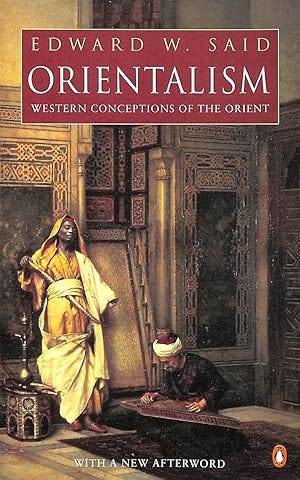
Dieser genealogische Ansatz basiert auf Edward Saids grundlegender Erkenntnis, dass der Orientalismus nicht nur ein wissenschaftliches Werk ist, sondern ein Wille zur Macht, ein System der Wissensproduktion, das gleichzeitig sein Objekt beschreibt und produziert und untrennbar mit den materiellen Bedingungen kolonialer und imperialer Herrschaft verbunden ist.[2]
Anti-iranische Islamophobie ist Orientalismus in einer seiner bedeutendsten zeitgenössischen Ausprägungen. Es so zu analysieren, bedeutet, darauf zu bestehen, dass der aktuelle Krieg gegen Iran nicht als sicherheitspolitische Reaktion auf eine nukleare Bedrohung, eine rationale Interessenabrechnung oder ein unvermeidlicher Konflikt zwischen gegensätzlichen „zivilisatorischen“ Werten verstanden werden kann. Es muss als politisch-militärischer Höhepunkt eines jahrzehntelangen islamophoben Wissensproduktionsprojekts verstanden werden, das das Islamophobia Studies Journal and Center analytisch und ethisch zu benennen und nachzuverfolgen hat.
II. Die iranische Revolution und der Zusammenbruch der beiden Säulen: Islamophober Diskurs als imperiale Schadensbegrenzung
Die iranische Revolution von 1979 war eines der folgenreichsten politischen Ereignisse des zwanzigsten Jahrhunderts, nicht weil sie die islamische Politik in eine säkulare Welt einführte, da der Islam in der Nachkriegszeit zentral für antikoloniale und nationalistische Bewegungen gewesen war, sondern weil sie in einem einzigen Volksaufstand das wichtigste Instrument der US-Hegemonie im Persischen Golf zerstörte.[3]
Die Nixon-Doktrin der frühen 1970er Jahre hatte Iran und Saudi-Arabien als die beiden Säulen der amerikanischen regionalen Sicherheitsarchitektur festgelegt, die sogenannte Zweispalten-Politik. Der Iran des Schahs war in diesem Rahmen nicht nur ein Verbündeter, sondern ein unverzichtbarer Vollstrecker der US-Interessen, kaufte Milliarden von Dollar an amerikanischen Waffen, unterdrückte linke und nationalistische Bewegungen von der Arabischen Halbinsel bis zum indischen Subkontinent und diente als entscheidender Knotenpunkt in der globalen anti-sowjetischen Eindämmungsstrategie. Die Revolution veränderte nicht nur eine Regierung; Es zerstörte eine gesamte Architektur kaiserlicher Kontrolle.[4]
Der Verlust Irans wurde in Washington nicht als Ausdruck des legitimen politischen Willens des iranischen Volkes erlebt, sondern als katastrophales Sicherheitsversagen, das eine Erklärung verlangte – und die Erklärung, die fast sofort gefunden wurde, war der Islam selbst.
Dies ist der Gründungsmoment der modernen anti-iranischen Islamophobie: die Umwandlung einer Volksrevolution gegen Tyrannei und fremde Herrschaft in Beweise für islamische Irrationalität, Fanatismus und zivilisatorische Unvereinbarkeit mit der Moderne. Die Revolution wurde nicht als Antiimperialismus interpretiert, was die Anerkennung der Rolle der Vereinigten Staaten bei der Unterstützung des brutalen SAVAK-Apparats des Schahs und der Inszenierung des CIA-Putsches von 1953, der die iranische Demokratie zerstörte, erfordert hätte, sondern durch die Kategorie religiöse Pathologie.
Dieser interpretative Schritt war nicht harmlos. Sie war das Produkt einer bestimmten Reihe institutioneller Akteure, Think Tanks, Medienorganisationen, Regierungsanalysten und akademischer Regionalstudienprogramme, die innerhalb eines orientalistischen erkenntnistheoretischen Rahmens agierten, der den Islam bereits als Erklärungsvariable für alles politische Verhalten in muslimischen Mehrheitsgesellschaften festgelegt hatte. Die Revolution war der Islam; die Geiselnahme war der Islam; die Gesänge von „Tod Amerika“ waren der Islam. Dass diese Ereignisse als Reaktionen auf jahrzehntelange amerikanisch unterstützte Unterdrückung verständlich waren, wurde systematisch aus dem dominanten interpretativen Rahmen ausgeschlossen.
Was durch diesen interpretativen Ausschluss hervorging, war nicht nur eine verzerrte Darstellung der iranischen Revolution, sondern das grundlegende Modell der modernen, islamophoben sozialen Vorstellung; der Muslim als grundlegend und unreduzibel religiös, als unfähig zu säkularer politischer Rationalität, als getrieben von theologischem Affekt statt materiellem Interesse, als Bedrohung für die liberale Ordnung nicht wegen etwas, das westliche Mächte den muslimischen Gesellschaften angetan hat, sondern wegen etwas Wesentlichem und Unveränderlichem in der Natur des Islam selbst.
III. Das visuelle Regime: Die islamophobe soziale Vorstellung durch Bilder der Revolution konstruieren
Die Konsolidierung der anti-iranischen Islamophobie war nicht nur ein diskursives oder politisches Phänomen; sie war kritisch und vielleicht vor allem ein visuelles. Die iranische Revolution brachte ein ikonografisches Archiv hervor, das jahrzehntelang zum grundlegenden Stockbild westlicher islamophober Darstellung werden sollte: die schwarz gekleideten Frauen mit voller Gesichtsbedeckung, die langbärtigen Geistlichen, die Menge erhobener Demonstranten, die brennenden amerikanischen Flaggen. Diese Bilder wurden ausgewählt, gerahmt und über einen westlichen Medienapparat verbreitet, der bereits von orientalistischen Annahmen über muslimische Körper und muslimische Emotionen strukturiert war.[5]
Die Auswahl ist hier entscheidend. Die iranische Revolution war eine Massenbewegung von außergewöhnlicher sozialer Breite und politischer Komplexität. Dazu gehörten Marxisten und Liberale, Nationalisten und Feministinnen, Arbeiter und Kaufleute, säkulare Studenten und fromme Geistliche. Die teilnehmenden Frauen waren nicht einheitlich verschleiert; viele waren es nicht. Der Diskurs und die Rhetorik der Bewegung ließen sich nicht auf religiösen Fanatismus reduzieren; sie griff auf eine anspruchsvolle Tradition des Antiimperialismus der Dritten Welt zurück, die sowohl lesbar war als auch in Befreiungsbewegungen von Kuba bis Vietnam gefeiert wurde.
Was die westliche Kamera sah, oder genauer gesagt, was die redaktionelle Apparatur zuließ, war der schwarze Chador, die erhobene Faust, der Ayatollah. Die Ganzgesichtsbedeckung wurde zur Synekdokhe für die Revolution als Ganzes und durch die Revolution für den Islam insgesamt. Diese visuelle Reduktion, die Verdichtung der politischen Komplexität einer gesamten Zivilisation zu einem einzigen, bedrohlichen Symbol, ist genau das, was Stuart Hall Stereotypisierung nannte: die Festlegung von Differenz zum Wesentlichen, die Naturalisierung zufälliger sozialer Tatsachen in unveränderliche Merkmale.[6]
Das islamophobische soziale Imaginär, das sich um diese Bilder kristallisierte, war nicht einfach ein Glaubensbild von Vorurteilen. Es war ein strukturiertes Repräsentationsfeld, das prägte, wie Muslime, alle Muslime, Schiiten und Sunniten, Iraner und Indonesier, gläubig und säkular, in westlichen Gesellschaften in den nächsten vier Jahrzehnten wahrgenommen, behandelt und regiert würden. Jede anschließende Krise, die Rushdie-Affäre, der Golfkrieg, 9/11, die Londoner Bombenanschläge, der Völkermord in Gaza und die Bombardierung des Libanon wurde durch diesen vorgefertigten visuellen Rahmen aufgenommen und interpretiert.
Die Kraft des media-imperialen Bildkomplexes lag nicht in einem einzelnen Foto oder einer Sendung, sondern in seiner kumulativen, iterativen Wirkung: der langsamen Sedimentation einer islamophoben Erkenntnistheorie, die zum Standard-kognitiven Rahmen wurde, durch den Muslime und muslimische Politik für westliche Öffentlichkeiten lesbar gemacht wurden.
Die geschlechtsspezifische Dimension dieses visuellen Regimes verdient besondere Aufmerksamkeit. Die verschleierte iranische Frau wurde in der westlichen Darstellung zur Figur islamischer Unterdrückung par excellence, eine Figur, die gleichzeitig die Feindseligkeit gegenüber Iran rechtfertigte, ein humanitäres Alibi für westlichen Interventionismus bot und den westlichen Liberalismus als einzige emanzipatorische Alternative für muslimische Frauen positionierte.[7]
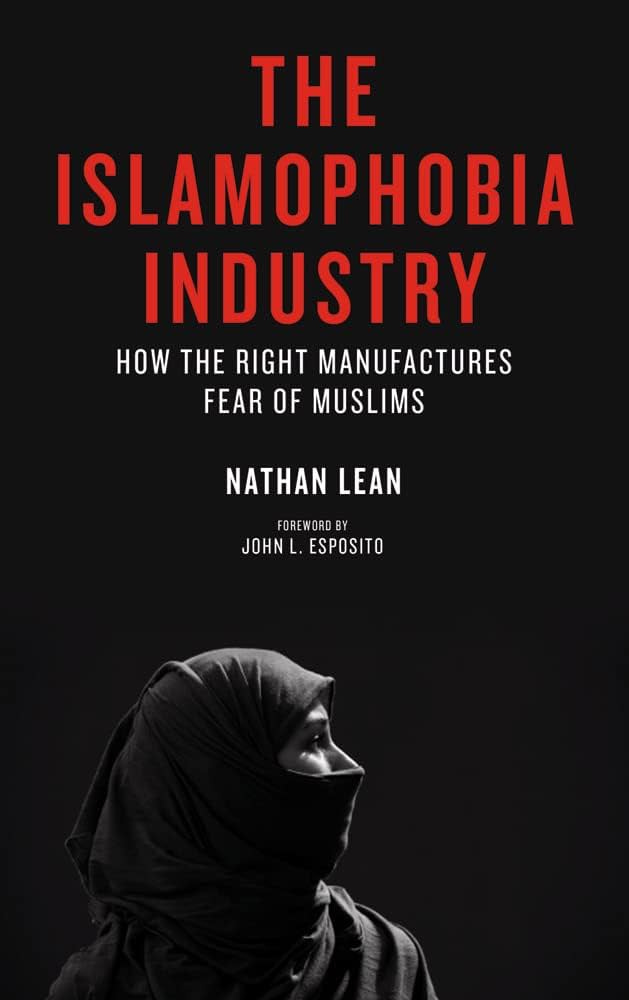
Dieser repräsentative Schritt wurde erreicht, indem systematisch die Handlungsfähigkeit, Stimme und politische Komplexität der iranischen und muslimischen Frauen selbst unterdrückt wurden, einschließlich der vielen iranischen Frauen, die aktiv religiöse Kleidung als Zeichen antiimperialer Solidarität gewählt hatten und sich anschließend der Konsolidierung der patriarchalen Politik der Islamischen Republik auf Bedingungen widersetzten, die der westliche Feminismus strukturell nicht anerkennen konnte.
IV. Das Gut-Muslim/Böse-Muslim-Binärsystem und die Instrumentalisierung anti-schiitischer Islamophobie im Kalten Krieg
Wenn die iranische Revolution den primären visuellen und affektiven Inhalt der anti-iranischen Islamophobie hervorbrachte, bot die Geopolitik des Kalten Krieges der 1980er Jahre die institutionelle Architektur, durch die diese Islamophobie zu einer dauerhaften Politik systematisiert wurde. Zwei miteinander verbundene Prozesse standen im Zentrum dieser Systematisierung: einerseits die Mobilisierung sunnitischer arabischer Regime gegen das revolutionäre Iran, andererseits die Mobilisierung des transnationalen sunnitischen politischen Islams gegen die Sowjetunion in Afghanistan.
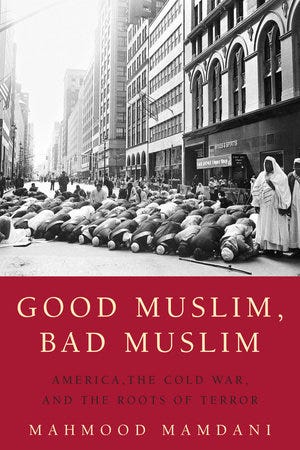
Beide Prozesse wurden von derselben grundlegenden Logik angetrieben, die Mahmood Mamdani mit analytischer Präzision als das Gut-Muslim/Böses-Muslim-Binärsystem bezeichnet hat, sowie die Instrumentalisierung islamischer Identitätskategorien durch die US-imperiale Macht, um zwischen jenen Muslimen zu unterscheiden, die amerikanischen Interessen dienten, den „Moderaten“, den „Verbündeten“, den „Reformern“, und denen, die sich ihnen widersetzten, den „Extremisten“, „Die „Fundamentalisten“, die „Dschihadisten“. Wichtig ist zu erkennen, dass dieses binäre Format nicht einfach ein beschreibendes, sondern produktives Rahmenwerk ist; er konstituiert aktiv die Identitäten, die er lediglich zu beschreiben vorgibt.[8]
Im Kontext des Persischen Golfs förderten und förderten die Vereinigten Staaten, in enger Abstimmung mit Saudi-Arabien, Ägypten, Kuwait, Marokko, Tunesien, Jordanien und den kleineren Golfmonarchien aktiv einen Diskurs über schiitische und sunnitische Sektiererkonflikte, der Iran nicht nur als existenzielle Bedrohung für amerikanische Interessen, sondern auch für den „sunnitischen Islam“ selbst darstellte. Der Iran-Irak-Krieg (1980–1988), der von Saddam Hussein mit ausdrücklicher Ermutigung und Unterstützung der USA initiiert wurde, wurde in diesem Diskurs nicht als Grenzkonflikt oder Kampf um regionale Hegemonie dargestellt, sondern als Verteidigungskrieg der sunnitischen Zivilisation gegen den persisch-schiitischen Expansionismus.[9]
Diese Darstellung erreichte mehrere ideologische Ziele gleichzeitig. Sie stellte die sunnitisch-arabischen Bevölkerungen hinter ihre autoritären Regierungen gegen eine Revolution, die in ihren Anfangsphasen eine echte Herausforderung für alle Formen politischer Tyrannei darstellte. Sie rekonstruierte Antiimperialismus, was die Revolution tatsächlich war, als sektiererische Aggression. Und sie positionierte die Vereinigten Staaten und ihre Golfverbündeten als Beschützer des sunnitischen Islam gegen eine schiitische Bedrohung und verschleierte damit den grundsätzlich imperialistischen Charakter der US-Politik in der Region.
Der instrumentelle Einsatz sunnitischem/schiitischen Sektierertum durch die Vereinigten Staaten und ihre Golfverbündeten spiegelte nicht bereits bestehende zivilisatorische Spaltungen wider, sondern die aktive Produktion dieser Divisionen als Instrumente imperialer Verwaltung.
Die gleichzeitige Mobilisierung des sunnitischen politischen Islams gegen die Sowjetunion in Afghanistan vollendete diese ideologische Architektur. Durch die Finanzierung, Bewaffnung und ideologische Stärkung von Mudschaheddin-Netzwerken aus der sunnitischen Welt, aus Saudi-Arabien, Ägypten, Jordanien und darüber hinaus schufen die Vereinigten Staaten und Saudi-Arabien das, was Mamdani als „politischen Islam“ bezeichnet, als spezifisches Phänomen des Kalten Krieges; ein Islam, der diszipliniert, als Waffe eingesetzt und als geopolitisches Instrument von genau jener Macht eingesetzt wurde, die ein Jahrzehnt später einen „Krieg gegen den Terror“ gegen dieselbe Schöpfung erklären sollte.[10]
Das Gute-Muslim/Böse-Muslim-Binärsystem agierte in diesem Kontext des Kalten Krieges als ein deutlich islamophober Mechanismus. Sie überwand oder entging der Islamophobie nicht, indem sie zwischen „guten“ und „bösen“ Muslimen unterschied; sie verkörperte Islamophobie noch tiefer, indem sie die islamische Identität selbst zur maßgeblichen Variable für die politische Bewertung machte – alle Muslime in erster Linie und im Wesentlichen als Muslime behandelte, als Wesen ihrer Religion und nicht als Vertreter ihrer politischen Umstände, und sie dann entlang einer politischen Achse sortierte, die nichts mit dem ethischen oder moralischen Inhalt ihrer islamischen Verpflichtungen zu tun hatte, sondern alles mit ihrer Ausrichtung an amerikanische imperialistische Interessen.
Die Schiiten waren in diesem Rahmen die paradigmatischen Bösen Muslime, definiert durch ihren Widerstand gegen die Architektur der Zwillingssäulen, durch ihre revolutionäre Herausforderung der regionalen Ordnung, durch ihre strukturelle Ausrichtung, so vermittelt und konfessioniert sie auch war, mit den Interessen der Islamischen Republik. Anti-schiitische Islamophobie war mit anderen Worten kein theologisches Vorurteil, das in politische Kleidung getarnt wurde; es war ein politisches Instrument, das theologische Kleidung trug.
V. Vom Kalten Krieg zum Zusammenstoß der Zivilisationen: Iran als postsowjetischer zivilisatorischer Feind
Der Zusammenbruch der Sowjetunion im Jahr 1991 verursachte eine tiefgreifende ideologische Krise für die westliche imperiale Politik; den Verlust des Hauptgegners, der vier Jahrzehnte militärischen Aufbaus, politischen Eingriffs und strategischen Bündnisses organisiert und gerechtfertigt hatte. Die Suche nach einem neuen Organisationsprinzip der globalen Politik, nach einem neuen Feind, der den institutionellen Apparat des Sicherheitsstaates und die moralische Ökonomie der westlichen zivilisatorischen Überlegenheit aufrechterhalten kann, brachte Samuel Huntingtons These „Clash of Civilizations“ hervor.[11]
Die These wurde von Wissenschaftlern aus der Islamophobie-Studientradition und der postkolonialen Theorie im weiteren Sinne stark kritisiert. Analytisch bedeutsam für das vorliegende Argument ist die Beziehung der These zur bereits bestehenden Architektur der anti-iranischen Islamophobie. Der Zusammenprall der Zivilisationen erzeugte nicht ex nihilo die Feindseligkeit zwischen „westlichen“ und „islamischen“ Zivilisationen; sie bot einen theoretischen Rahmen, der eine Reihe islamfeindlicher Darstellungen, politischen Ausrichtungen und Medienpraktiken, die seit 1979 im Aufbau waren, organisierte, legitimierte und auf das Niveau der großen Theorie erhob.
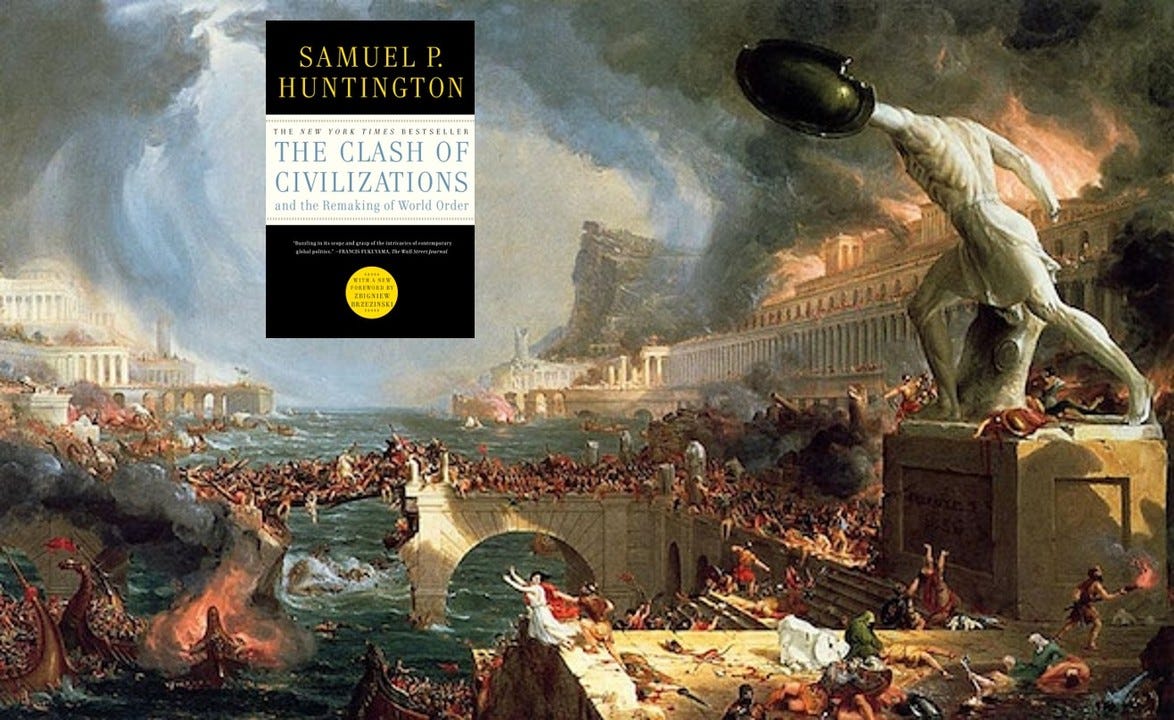
Iran und der schiitische Islam nahmen eine eigentümliche und besonders bedeutende Position innerhalb der Huntington-Zivilisationskarte ein. Als einziger islamischer Staat, der explizit als theologische Herausforderung der westlichen liberalen Ordnung organisiert ist, als „Islamische Republik“ statt als säkulare Republik oder traditionelle Monarchie, bot Iran das paradigmatische Beispiel für die anhärente Feindseligkeit der islamischen Zivilisation gegenüber der westlichen Moderne. Die Geiselnahme, die Fatwa gegen Salman Rushdie, die Unterstützung für Hisbollah und Hamas; jede dieser Episoden wurde durch den Huntington-Rahmen empfangen und verstärkt, als weiterer Beweis für eine irreduzible zivilisatorische Unvereinbarkeit.
Die kritische Erkenntnis, die im Islamophobia Studies Journal entwickelt wurde, ist, dass diese Beziehung nicht eine einfache Anwendung ist, sondern die These des Zusammenstoßes der Zivilisationen, angewandt auf eine bereits bestehende iranische Bedrohung, sondern eine gegenseitige Konstitution. Die Clash of Civilizations-These brauchte Iran, brauchte einen theokratischen islamischen Staat, der als verkörpertes Beispiel zivilisatorischer Opposition dienen konnte, ebenso dringend wie das US-außenpolitische Establishment den Clash of Civilizations-Rahmen brauchte, um seine strategische Haltung nach dem Kalten Krieg zu organisieren. Anti-iranische Islamophobie und das Paradigma „Clash of Civilizations“ haben sich gegenseitig hervorgebracht.[12]
Islamophobie ist nicht nur mit dem Rahmen des Clash of Civilizations korreliert – sie ist dessen konstitutiv. Der Zusammenstoß der Zivilisationen IST Islamophobie, erhoben auf das Niveau einer großen Theorie, und anti-iranischer Diskurs ist seine organisatorische Substanz. — Hatem Bazian, Islamophobia Studies Journal
Die Folge dieser konstitutiven Beziehung ist, dass der Diskurs über Iran als existenzielle Bedrohung in der Zeit nach dem Kalten Krieg selbsttragend und selbstverstärkend wurde. Es schuf eine eigene institutionelle Infrastruktur – iran-fokussierte Think Tanks, Iran-Falken in der politischen Gemeinschaft, iran-fokussierte akademische Programme, Iran-fokussierte Medienberichterstattung – die einen kontinuierlichen Strom von Inhalten erzeugte, die die These der iranischen Zivilisationsbedrohung bestätigten und ausarbeiteten. Diese Infrastruktur diente nicht als rationale Bewertung iranischer Fähigkeiten oder Absichten, sondern als islamophobes Wissensproduktionssystem, das um die vorgegebene Schlussfolgerung der iranischen Bedrohung herum organisiert war und von dieser Schlussfolgerung aus rückwirkend arbeitete, um alle Beweise zu wählen, zu interpretieren und zu verstärken, die sie stützten.
VI. Palästina, israelische Hasbara und die Islamophobie-Industrie: Konvergente Architekturen
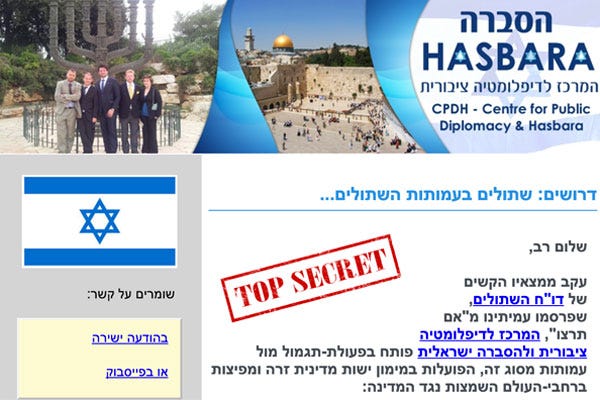
Das Aufkommen der Islamophobie-Studien als Feld kritischer und dekolonialer wissenschaftlicher Forschung wurde maßgeblich durch die Erkenntnis angetrieben, dass die inländische Islamophobie-Industrie in den USA und Europa, das Netzwerk von Think Tanks, Interessenvertretungen, Medien, politischen Persönlichkeiten und akademischen Akteuren, die anti-muslimische Diskurse produzieren und verbreiten, strukturell mit dem israelisch-palästinensischen Konflikt verbunden ist und, insbesondere auf den Hasbara-Apparat des israelischen Staates.[13]
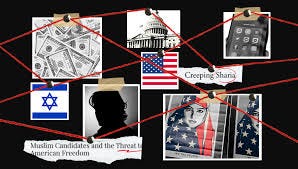
Diese Verbindung besteht nicht nur aus gemeinsamem Personal oder Finanzierung, obwohl beides gut dokumentiert ist. Es ist grundlegender eine Verbindung strategischer Logik. Der israelische Staat sah sich nach dem Zusammenbruch des Oslo-Prozesses und der Zweiten Intifada einer wachsenden internationalen Bewegung für palästinensische Rechte gegenüber, die drohte, die Bedingungen der westlichen Öffentlichkeit und der politischen Meinung gegen die israelische Besatzungspolitik zu verschieben. Die Hasbara-Antwort auf diese Herausforderung bestand darin, den palästinensischen Kampf nicht als Frage der kolonialen Enteignung, des Strebens nach Freiheit und Menschenrechten neu zu interpretieren, sondern als Ausdruck von „islamistischem Terrorismus“ und zivilisatorischem Konflikt.[14]
Hamas, Hisbollah und ihre Verbindungen zum Iran wurden in dieser Umgestaltung zu den zentralen organisierenden Figuren. Die palästinensische Frage wurde in den anti-iranischen islamophoben Rahmen aufgenommen; Der palästinensische Widerstand war nicht der Widerstand eines kolonisierten Volkes, sondern der Vorwärtsverkehr des iranisch unterstützten „islamistischen“ Expansionismus. Diese Umgestaltung erreichte das strategische Doppelziel, palästinensische Ansprüche zu delegitimieren und gleichzeitig den Diskurs über Iran als existenzielle Bedrohung zu verstärken.[15]
Die Raffinesse und Ambition dieser Hasbara-Strategie wurden durch durchgesickerte Dokumente der Stagwell Group, einer großen globalen PR-Firma mit engen Verbindungen zu israelischen Regierungsstellen, dramatisch beleuchtet. Forschungen von Stagwell und dessen Gründungsfirma, dem von Mark Penn gegründeten Meinungs- und Strategiekommunikationsunternehmen, testeten eine breite Palette von Messaging-Rahmenwerken bei amerikanischen Zielgruppen und stellten fest, dass die Darstellung israelischer Militäroperationen im Hinblick auf die Bedrohung durch den „radikalen Islam“ durch Betonung iranischer Unterstützung, islamistische Ideologie und zivilisatorische Bedrohung die größten Veränderungen in der positiven Meinung hervorrief. Die Unterstützung stieg unter den Befragten, die zunächst kritische Ansichten über das israelische Militärverhalten geäußert hatten, um mehr als zwanzig Prozentpunkte zurück.[16]
Die geleakte Stagwell-Forschung stellt dokumentarische Beweise für das dar, was die Islamophobie-Forschung seit langem analytisch behauptet: dass anti-iranische Islamophobie und pro-israelische Fürsprache keine parallelen Diskurse sind, die rhetorisches Terrain teilen, sondern integrierte Komponenten einer einzigen strategischen Kommunikationsarchitektur.
Das Islamophobia Studies Center hat in diesem Zusammenhang argumentiert, dass die Beziehung zwischen der israelischen Hasbara und der Islamophobie-Industrie am besten nicht durch die Linse einer Verschwörung als eine einzige koordinierte Operation aus einem zentralen Hauptquartier verstanden werden kann, sondern durch die Linse der strukturellen Konvergenz: zwei institutionelle Systeme, die organisatorische Netzwerke, Finanzierungsströme, politische Allianzen teilen, und ideologische Rahmenwerke, die sich über Jahrzehnte paralleler Entwicklung zu einer tiefen funktionalen Integration entwickelt haben.[17]
Genau das ist die Dynamik, die wir seit Jahren beschreiben: Islamophobie wird instrumentalisiert, um Israel als Bollwerk der „westlichen Zivilisation“ gegen einen angeblich monolithischen, bedrohlichen Islam erscheinen zu lassen. Je mehr Muslime als gefährlich dargestellt werden, desto notwendiger und tugendhafter erscheint Israel als Frontfestung, deren Gewalt als „Selbstverteidigung“ bezeichnet wird. Das Interview des israelischen Premierministers Netanjahu im französischen Fernsehen um den 24. Mai 2024 ist anschaulich, indem es den Völkermord am Gazastreifen als Verteidigung der westlichen Zivilisation darstellt:
Französisch: „Notre victoire, c’est votre victoire! C’est la victoire de la civilisation judéo-chrétienne contre la barbarie. C’est la victoire de la France!“
Englische Übersetzung): „Unser Sieg ist euer Sieg! Es ist der Sieg der jüdisch-christlichen Zivilisation über die Barbarei. Es ist der Sieg Frankreichs!“
Am 26. Mai 2025 wiederholte der deutsche Bundeskanzler Friedrich Merz Netanjahus Darstellung des Krieges in Gaza als „Schutz der westlichen Zivilisation“, was perfekt in Angstmacherei und islamfeindliche Vorstellung passt.
Die anti-iranische Dimension dieser Konvergenz ist strukturell notwendig und nicht nebensächlich. Israels Fähigkeit, sich als bedrängter Außenposten der westlichen Zivilisation in einem Meer islamischer Feindseligkeit zu präsentieren, hängt entscheidend von der Glaubwürdigkeit der iranischen Bedrohungserzählung ab. Ein Israel, das nicht auf die „iranisch unterstützte“ Hisbollah im Libanon, die „iranisch unterstützte“ Hamas in Gaza und „iranische nukleare Ambitionen“ als existenzielle Bedrohungen verweisen könnte, würde einem ganz anderen internationalen politischen Umfeld gegenüberstehen. Die Aufrechterhaltung eines anti-iranischen islamophoben Diskurses ist in diesem Sinne ein strategisches Imperativ der israelischen Außenpolitik, und der Hasbara-Apparat investiert entsprechend.[18]
VII. Das orientalistische koloniale Erbe und die Aktivierung struktureller Islamophobie in der westlichen Außenpolitik
Die in den vorangegangenen Abschnitten beschriebenen Verfahren funktionierten nicht auf einem unbeschriebenen Blatt. Sie aktivierten, entwickelten und institutionalisierten ein orientalistisches und koloniales Erbe, das bereits tief in der westlichen Wissensproduktion, kultureller Repräsentation und politischer Kultur verankert war.[19]
Saids Orientalismus dokumentierte die langjährige westliche wissenschaftliche und kulturelle Tradition, den islamischen Orient als Negation westlicher Rationalität, Freiheit und Fortschritt darzustellen, als eine Welt der Sinnlichkeit, Irrationalität, Fanatismus und Despotie. Diese repräsentative Tradition war nicht nur akademisch; sie war die erkenntnistheoretische Infrastruktur der Kolonialverwaltung und bot die kognitiven und moralischen Rahmen, durch die europäische Mächte ihre Dominanz über muslimische Mehrheitsgesellschaften von Indien über Nordafrika bis zur Levante rechtfertigten.
Der Aufbau der anti-iranischen Islamophobie nach 1979 griff auf dieses Erbe zurück und passte es an die Bedingungen der imperialistischen Politik des späten 20. Jahrhunderts an. Der Ayatollah ersetzte den orientalischen Despoten; die Islamische Republik ersetzte das Osmanische Reich; das Atomprogramm ersetzte die arabische Bedrohung der imperialen Handelsrouten mit den Squads in der Hand. Der Oberflächeninhalt veränderte sich, während die tiefe Struktur der orientalistischen Darstellung, die wesentliche Irrationalität der islamischen Regierung, die Unmöglichkeit muslimischer Selbstbestimmung und die Notwendigkeit westlicher Intervention sowohl als moralische Verpflichtung als auch zivilisatorische Notwendigkeit intakt und wirksam blieben.
Was die Zeit nach 1979 zu diesem kolonialen Erbe hinzufügte, war die institutionelle Infrastruktur dessen, was man mit Recht als strukturelle Islamophobie bezeichnen kann; ein System nicht individueller Vorurteile, sondern organisierter, gut finanzierter, politisch vernetzter Diskursproduktion, die an der Schnittstelle von außenpolitischer Vertretung, Innenpolitik, Medienproduktion und akademischer Legitimation agiert. Die Islamophobie-Industrie ist in diesem Sinne die zeitgenössische Organisationsform des Orientalismus – die industrielle Ausprägung des Orientalismus in der Ära der Massenmedien, der Think-Tank-Politik und der 24-Stunden-Nachrichtenzyklen.[20]
Der strukturelle Charakter dieser Islamophobie bedeutet, dass sie nicht für die Mittel geeignet ist, die eine vorurteilsorientierte Analyse nahelegen würde: Bildung, Kontakt, Dialog und individuelle Einstellungsänderung. Sie ist um materielle Interessen organisiert, politisch, militärisch, wirtschaftlich und ideologisch, und wird von institutionellen Akteuren aufrechterhalten, die von ihrer Aufrechterhaltung profitieren. Der Diskurs über die Iran-Bedrohung profitiert der Rüstungsindustrie (die von dem notwendigen militärischen Aufbau profitiert), dem Israel-Advocacy-Netzwerk (das es nutzt, um israelische Politik und Völkermord vor Kritik zu schützen), der inländischen Islamophobie-Industrie (die sie nutzt, um Spenden zu sammeln und politische Anhängerschaften aufzubauen) sowie den Segmenten des politischen Establishments beider Parteien, die ihre Karrieren um den Sicherheitsstaatsrahmen herum organisiert haben, den sie aufrechterhält.
Es ist erwähnenswert, dass diese strukturelle Analyse die Unterscheidung zwischen verschiedenen Akteuren und ihren unterschiedlichen Graden von Intentionalität, Zynismus oder echtem ideologischem Engagement nicht aufhebt. Einige Teilnehmer der Islamophobie-Industrie nutzen zynisch einen profitablen Diskurs aus; andere sind wahre Gläubige; wieder andere nehmen einen Mittelweg motivierter Argumentation ein, in dem ihre materiellen Interessen und ihre aufrichtigen Überzeugungen durch die Strukturen, innerhalb ihrer Tätigkeit, gegenseitig gestärkt wurden. Die strukturelle Analyse besteht darauf, dass das Fortbestehen und die Macht der anti-iranischen Islamophobie nicht allein durch individuelle Psychologie erklärt werden kann – sei es der aufrichtige Fanatismus von Ideologen oder der böse Abschluss zynischer Akteure –, sondern eine Aufmerksamkeit für die institutionellen Bedingungen erfordert, die anti-iranische Islamophobie kontinuierlich und profitabel reproduzierbar machen.
VIII. Der Krieg gegen Iran als Höhepunkt islamophober Diskurse: Imperium, Hasbara und die Autorisierung der Zerstörung
Die US-israelische Militärkampagne gegen den Iran ist im analytischen Rahmen, der in diesem Artikel entwickelt wurde, keine Abkehr von den Mustern der vorangegangenen vier Jahrzehnte, sondern deren Höhepunkt. Es ist der Moment, in dem die islamophobe Diskursarchitektur, die in diesen Jahrzehnten aufgebaut wurde, das visuelle Regime bedrohlicher muslimischer Körper, das Good-Muslim/Bad Muslim-Binärsystem, der Clash of Civilizations-Rahmen und die Hasbara-Integration ihr operatives Endergebnis erreicht: die Autorisierung militärischer Zerstörung als zivilisatorische Selbstverteidigung.[22]
Diese Beobachtung sollte nicht als Behauptung missverstanden werden, dass Diskurs militärische Ergebnisse in einem einfachen oder mechanischen Sinne bestimmt. Materielle Interessen, strategische Überlegungen, Allianzdynamiken und Innenpolitik sind alle relevant, um die spezifischen Entwicklungen der US-israelischen Politik und des Krieges gegenüber Iran zu verstehen. Doch die Beobachtung weist auf etwas analytisch Wesentliches hin: Der Raum politischer Möglichkeiten, in dem diese Interessen, Berechnungen und Dynamiken agieren, wurde durch vier Jahrzehnte islamophober Diskursproduktion geprägt und eingeschränkt. Der Krieg gegen den Iran ist denkbar, präsentabel und als politische Option nachhaltig, weil die islamfeindliche Architektur dies möglich gemacht hat.
Der Völkermord in Gaza von 2023–2026 ist analytisch untrennbar mit diesem Verlauf verbunden. Der Völkermord wurde in seiner internationalen Dimension durch die Bereitstellung von Waffen, diplomatischer Deckung und die Legitimierung von Diskursen durch westliche Regierungen ermöglicht, genau durch die im vorangegangenen Abschnitt beschriebene Hasbara-Islamophobie-Konvergenz. Die systematische Berufung auf die „vom Iran unterstützte Hamas“, die „7. Oktober als zivilisatorischer Angriff“-Rahmung, die Verbreitung der „radikalen Islam“-Botschaft, die von der Stagwell-Forschung als maximal wirksam zur Veränderung der amerikanischen Meinung identifiziert wurde: All dies sind direkte Anwendungen der anti-iranischen islamophoben Diskursarchitektur auf die spezifischen politischen und rhetorischen Bedürfnisse des Völkermords.
Der Völkermord wiederum erzeugt neue Inhalte für diese Architektur und neue Dringlichkeit für den Krieg gegen den Iran. Das Überleben der Hamas, die Widerstandsfähigkeit der Hisbollah, die Blockade der Schifffahrt im Roten Meer durch die Huthis – all dies wird durch den islamophoben Rahmen als Beweis für iranische imperiale Übergriffe, für die expansionistische Bedrohung des „schiitischen Halbmonds“, für die existenzielle Gefahr, die eine militärische Reaktion erfordert, dargestellt. Der Diskurs und die militärische Kampagne erzeugen sich gegenseitig in einer Rückkopplungsschleife, die Islamophobiestudien klar und ohne Zweifel analysieren müssen.
Der Krieg gegen Iran ist nicht nur eine sicherheitspolitische Entscheidung; es ist der politisch-militärische Höhepunkt eines vierundvierzigjährigen islamophoben Wissensproduktionsprojekts. Sie nur durch die Linse strategischer Berechnung zu verstehen, bedeutet, die Amnesie zu reproduzieren, auf die die Islamophobie-Industrie für ihre Legitimität angewiesen ist.
Die hier entwickelte Analyse fordert auch die Aufmerksamkeit auf die innenpolitische Dimension der anti-iranischen Islamophobie. Die politische Klasse der Vereinigten Staaten, die militärische Maßnahmen gegen den Iran autorisiert und finanziert, ist dieselbe politische Klasse, die in den letzten zehn Jahren die islamophobe, gesetzgeberische, rhetorische und politische Agenda toleriert und in vielen Fällen aktiv gefördert hat, wie sie in Artikeln, Jahresberichten und der US National Counter-Islamophobia Strategy dokumentiert ist. Die Kongressmitglieder, die von „muslimischen Problemen“ gesprochen haben, die versucht haben, muslimische Gemeinschaftsorganisationen als terroristische Organisationen zu deklarieren, die Überwachung und Profilierung muslimischer Gemeinschaften gefördert haben, sind keine eigenständige politische Kategorie von den Iran-Falken. Sie sind in vielen Fällen dieselben Menschen, die aus derselben strukturellen Position innerhalb der islamophoben Architektur handeln.
IX. Auf dem Weg zu einer kritischen Genealogie der anti-iranischen Islamophobie und der Imperative der Solidarität
Das Argument dieses Artikels war genealogisch in seiner Methode und strukturell in seinem analytischen Rahmen. Indem sie den Aufbau von anti-iranischen und anti-schiitischen Diskursen über sechs miteinander verknüpfte historische und institutionelle Prozesse, imperiale Schadensbegrenzung nach 1979, visuellen Regimeaufbau, Instrumentalisierung des Kalten Krieges, die Theorie des Zusammenpralls der Zivilisationen, die Konvergenz der Hasbara-Islamophobie-Industrie und kolonial-orientalistische Erbschaft nachzeichnet, versucht sie zu zeigen, dass anti-iranische Islamophobie kein beiläufiges oder peripheres Merkmal der Islamophobie-Industrie ist, sondern eine ihrer grundlegenden Säulen.
Die analytischen und politischen Implikationen dieses Arguments sind bedeutsam. Sie schlagen zunächst vor, dass der Kampf gegen Islamophobie nicht angemessen innerhalb eines rein innenpolitischen Rahmens, als Kampf gegen individuelle Vorurteile, diskriminierende Gesetze, gegen Hassrede geführt werden kann, ohne gleichzeitig die außenpolitischen Dimensionen der islamophoben Architektur zu berücksichtigen. Die innen- und ausländischen Dimensionen der Islamophobie sind keine parallelen Spuren, sondern ein einziges integriertes System, und Reaktionen, die das eine angehen und das andere ignorieren, werden die strukturellen Bedingungen, die beide tragen, nicht abbauen.
Sie schlagen zweitens vor, dass Solidarität zwischen muslimischen Gemeinschaften über die sunnitisch-schiitische Grenze hinweg nicht nur ein theologisches oder gemeinschaftliches Bestreben ist, sondern eine politische Notwendigkeit. Das Good-Muslim/Bad-Muslim-Binär hat im gesamten in diesem Artikel untersuchten Zeitraum die innermuslimischen Spaltungen ausgenutzt und verstärkt und vor allem sunnitisch-arabische Regime und den sunnitischen politischen Islam als Instrumente gegen die iranische Revolution und die ihr verbundenen schiitischen Gemeinschaften eingesetzt. Eine kritische Islamophobie-Politik muss diese Trenn-und-Herrscher-Logik als das anerkennen, was sie ist, und die gemeinschaftsübergreifenden Solidaritäten aufbauen, die ihr widerstehen können.
Sie schlagen drittens vor, dass die palästinensische und die iranische Frage nicht zwei getrennte Themen sind, die zufällig im selben regionalen Kontext diskutiert werden, sondern strukturell miteinander verbundene Knotenpunkte in einer einzigen islamophoben Architektur. Die Befreiung Palästinas und der Widerstand gegen den Krieg gegen Iran sind in dieser Analyse keine konkurrierenden Solidaritätsforderungen, sondern gegenseitig verstärkende Imperative. Die Hasbara-Islamophobie-Konvergenz, die sie im Dienst des Imperiums verbunden hat, muss durch eine kritisch-wissenschaftliche und politische Konvergenz begegnet werden, die sie im Dienst der Gerechtigkeit verbindet.
Abschließend unterstreicht das Argument dieses Artikels die besondere und dringende Verantwortung der Islamophobie-Studien in diesem historischen Moment. Der Krieg gegen Iran wird unter Bedingungen intensiver ideologischer Steuerung geführt, bei der die islamophobe Diskursarchitektur mit maximaler Intensität eingesetzt wird, um kritische Analysen zu unterdrücken, Zustimmung herzustellen und den Entscheidungsapparat vor demokratischer Rechenschaftspflicht zu schützen. Die im Islamophobia Studies Center entwickelten kritischen wissenschaftlichen Werkzeuge, strukturelle Analyse, genealogische Methode, Aufmerksamkeit für die Produktionsbedingungen des Wissens über Islam und Muslime sowie das Beharren auf den Verbindungen zwischen inländischer und ausländischer Islamophobie sowie verbundener kolonialer Geschichte sind nicht nur akademische Ressourcen, sondern politische Notwendigkeiten.
Die Aufgabe der Islamophobie-Studien in diesem Moment ist es nicht, die islamophobische Architektur aus einer sicheren wissenschaftlichen Distanz zu beschreiben, sondern durch rigorose kritische Analyse zur politischen Arbeit beizutragen, sie abzubauen.
Anti-iranische und anti-schiitische Islamophobie ist eine der bedeutendsten und dauerhaftesten Säulen dieser Architektur. Es klar zu benennen, seine Genealogie ehrlich nachzuverfolgen und auf seine Verbindung zu allen Dimensionen der westlichen Politik gegenüber Muslimen und muslimischen Mehrheitsgesellschaften zu bestehen – das ist die analytische und politische Arbeit, die der gegenwärtige Moment verlangt.
[1] Hatem Bazian, „Islamophobia Studies Journal: Framing the Field,“ Islamophobia Studies Journal 1, Nr. 1 (2012): 7–8. Das Journal, gegründet an der UC Berkeley, schuf die kritische wissenschaftliche Infrastruktur zur Analyse von Islamophobie als strukturelles und systemisches Phänomen statt als Sammlung individueller Vorurteile.
[2] Edward Said, Orientalismus (New York: Pantheon Books, 1978).
[3]Nikki R. Keddie, Modern Iran: Roots and Results of Revolution (New Haven: Yale University Press, 2006), 229–245. Siehe auch Ervand Abrahamian, Khomeinism: Essays on the Islamic Republic (Berkeley: University of California Press, 1993).
[4] Zbigniew Brzezinski, Power and Principle: Memoirs of the National Security Adviser 1977–1981 (New York: Farrar, Straus and Giroux, 1983), 354–398. Brzezinski beschrieb Iran und Saudi-Arabien ausdrücklich als die „Zwillingssäulen“ der US-Regionalstrategie und dokumentierte die Reaktion der Carter-Regierung auf die Revolution.
[5] Siehe Edward Saids Buch Covering Islam für eine detaillierte Untersuchung des Themas.
[6] Stuart Hall, „Das Spektakel des ‚Anderen'“, in Representation: Cultural Representations and Signifying Practices, hrsg. Stuart Hall (London: Sage, 1997), 223–290. Außerdem ist es wichtig, Jack Shaheens Reel Bad Arabs: How Hollywood Vilifies a People (überarbeitete und aktualisierte Ausgabe) zu lesen. New York: Olive Branch Press, Interlink Publishing Group. ISBN 978-1-62371-006-4. OCLC 928572276. – ursprünglich veröffentlicht 2001.
[7] Lila Abu-Lughod, brauchen muslimische Frauen Rettung? (Cambridge: Harvard University Press, 2013).
[8] Mahmood Mamdani, Good Muslim, Bad Muslim: America, the Cold War, and the Roots of Terror (New York: Pantheon Books, 2004), 17–62.
[9]Vali Nasr, Die schiitische Erweckung: Wie Konflikte im Islam die Zukunft prägen werden (New York: Norton, 2006), 21–44.
[10] Steve Coll, Ghost Wars: The Secret History of the CIA, Afghanistan, and Bin Laden from the Soviet Invasion to September 10, 2001 (New York: Penguin, 2004), 50–90.
[11] Samuel P. Huntington, „Der Zusammenprall der Zivilisationen?“ Foreign Affairs 72, Nr. 3 (1993): 22–49. Für die kritische postkoloniale Antwort siehe Edward Said, „The Clash of Ignorance“, The Nation, 22. Oktober 2001.
[12] Hatem Bazian, „Islamophobie, der Zusammenprall der Zivilisationen und die Herstellung der muslimischen Bedrohung“, MDPI Religions 9, Nr. 9 (2018): 282. https://doi.org/10.3390/rel9090282
[13] Hatem Bazian, „Die Islamophobie-Industrie und die Dämonisierung Palästinas“, American Quarterly, Bd. 67 Nr. 4, 2015, S. 1057-1066. Projekt MUSE, https://dx.doi.org/10.1353/aq.2015.0073.
[14] Nathan Lean, Die Islamophobie-Industrie: Wie die Rechte Angst vor Muslimen erzeugt (London: Pluto Press, 2012). Siehe auch Center for American Progress, Fear, Inc.: The Roots of the Islamophobia Network in America (Washington, DC: CAP, 2011).
[15] Ali Abunimah, Der Kampf um Gerechtigkeit in Palästina (Chicago: Haymarket Books, 2014), 118–154. Siehe auch Trita Parsi, Treacherous Alliance: The Secret Dealings of Israel, Iran, and the United States (New Haven: Yale University Press, 2007), 241–288 zur „existenziellen Bedrohung“ Irans in der israelischen Außenpolitik.
[16] Dropsite News, „Leaked: Israel Reputation Survey Research von Mark Penn/Stagwell“ (2024).
Vor 7 Monaten · 768 Gefällt mir · 33 Kommentare · Ryan Grim
[17] Hatem Bazian, „Islamophobie, israelische Hasbara und die Architektur strukturellen anti-muslimischen Rassismus“, Substack (2025). https://substack.com/@hbazian/p-181197210
[18] Antony Loewenstein, The Palestine Laboratory: How Israel exports the technology of occupation around the world (London: Verso, 2023), 89–124.
19. Said, Edward W. Orientalismus. New York: Pantheon Books, 1978.
[20] Hatem Bazian, „Krieg gegen den Islam: Staatsgewalt, strukturelle Islamophobie und die Architektur des Imperiums.“ Medium-Artikel, 2. März 2022. https://medium.com/@Prof.hatembazian/islamophobia-and-structuring-post-cold-war-new-world-order-3b2df09f04e5
[22] Siehe Trita Parsi, Treacherous Alliance (New Haven: Yale University Press, 2007), 241–288.
Anti-Iran and Anti-Shia Discourses as a Major Pillar in the Islamophobia Industry
From the Iranian Revolution to the War on Iran: Orientalism, Empire, and the Architecture of Islamophobic Discourse
By Dr Hatem Bazian
April 08, 2026
https://hbazian.substack.com/p/anti-iran-and-anti-shia-discourses
Abstract
This article argues that anti-Iran and anti-Shia discourses constitute one of the most historically persistent and politically consequential pillars of the modern Islamophobia industry. Beginning with the 1979 Iranian Revolution and the collapse of the United States’ “Twin Pillars” regional security architecture, the article traces the systematic construction of Iran as an existential civilizational threat through overlapping vectors; Western imperial media, the instrumentalization of Sunni Arab regimes, Cold War mobilization of political Islam against the Soviet Union, the post-Cold War Clash of Civilizations paradigm, and the Israeli Hasbara network’s structuring role in shaping Western foreign policy discourse. Drawing on the analytical framework developed in the Islamophobia Studies Center, particularly the concept of structural Islamophobia and the thesis that Islamophobia is constitutive of, not merely associated with, the Clash of Civilizations paradigm, the article demonstrates that the current US-Israeli military campaign against Iran represents not a departure from but the culmination of four decades of Islamophobic discourse production. The Good Muslim/Bad Muslim binary is shown to have operated as a specifically Islamophobic instrument from its colonial and Cold War inception, while the convergence of the Israeli Hasbara apparatus with the domestic Islamophobia industry has produced durable policy outcomes at the highest levels of Western statecraft.
Keywords: Islamophobia; anti-Shia discourse; Iranian Revolution; Clash of Civilizations; Israeli Hasbara; structural Islamophobia; Good Muslim/Bad Muslim; Orientalism; US foreign policy; empire
******
I. The Structural Embeddedness of Anti-Iran Discourse in the Islamophobia Industry
The field of Islamophobia studies, as developed in the Islamophobia Studies Journal, Islamophobia Studies Center, and the broader critical scholarly literature that has emerged from the Islamophobia Research and Documentation Project at UC Berkeley, has consistently argued that Islamophobia must be understood not as a collection of individual prejudices, ignorant opinions, or episodic bigotry, but as a structural, systemic, and institutionalized phenomenon embedded in the political economies of Western imperial power.[1]
This article advances the argument that anti-Iran and anti-Shia discourses constitute one of the most historically durable and politically consequential pillars of this Islamophobia industry, a pillar that has been systematically constructed, maintained, and amplified across more than four decades, from the Iranian Revolution of 1979 to the current US-Israeli war against the Islamic Republic. The argument proceeds through six interrelated analytical claims that together constitute a genealogy of anti-Iran Islamophobia with its genesis in the collapse of the American Twin Pillars regional security architecture; its consolidation through visual and media regimes of representation; its Cold War instrumentalization through the Good Muslim/Bad Muslim binary; its absorption into the post-Cold War Clash of Civilizations paradigm; its structural articulation with the Palestinian question and Israeli Hasbara; and its culmination in the current war on Iran.
This genealogical approach is grounded in Edward Said’s foundational insight that Orientalism is not merely a body of scholarship but a will to power, a system of knowledge production that simultaneously describes and produces its object, and that is inseparable from the material conditions of colonial and imperial domination.[2]
Anti-Iran Islamophobia is Orientalism in one of its most consequential contemporary manifestations. To analyze it as such is to insist that the current war against Iran cannot be understood as a security policy response to a nuclear threat, a rational calculation of interests, or an inevitable clash between opposed “civilizational” values. It must be understood as the political-military culmination of a decades-long Islamophobic knowledge production project, one that the Islamophobia Studies Journal and Center has the analytical and ethical responsibility to name and to trace.
II. The Iranian Revolution and the Collapse of the Twin Pillars: Islamophobic Discourse as Imperial Damage Control
The Iranian Revolution of 1979 was one of the most consequential political events of the twentieth century, not because it introduced Islamic politics into a secular world, since Islam had been central to anti-colonial and nationalist movements throughout the post-war period, but because it destroyed, in a single popular uprising, the primary instrument of US hegemony in the Persian Gulf.[3]
The Nixon Doctrine of the early 1970s had designated Iran and Saudi Arabia as the two pillars of American regional security architecture, the so-called Twin Pillars policy. The Shah’s Iran was, in this framework, not merely an ally but an indispensable enforcer of US interests, purchasing billions of dollars in American weaponry, suppressing leftist and nationalist movements from the Arabian Peninsula to the Indian subcontinent, and serving as a critical node in the global anti-Soviet containment strategy. The Revolution did not merely change a government; it demolished an entire architecture of imperial control.[4]
The loss of Iran was not experienced in Washington as the expression of the legitimate political will of the Iranian people, but as a catastrophic security failure that demanded explanation — and the explanation that was reached for, almost immediately, was Islam itself.
This is the founding moment of modern anti-Iran Islamophobia: the transformation of a popular revolution against tyranny and foreign domination into evidence of Islamic irrationality, fanaticism, and civilizational incompatibility with modernity. The Revolution was read not through the category of anti-imperialism, which would have required acknowledging the role of the United States in supporting the Shah’s brutal SAVAK apparatus, in orchestrating the 1953 CIA coup that destroyed Iranian democracy, but through the category of religious pathology.
This interpretive move was not innocent. It was the product of a specific set of institutional actors, think tanks, media organizations, government analysts, and academic area studies programs, operating within an Orientalist epistemological framework that had already pre-constituted Islam as the explanatory variable for all political behavior in Muslim-majority societies. The Revolution was Islam; the hostage crisis was Islam; the chants of “Death to America” were Islam. That these events were intelligible as responses to decades of American-backed repression was systematically excluded from the dominant interpretive frame.
What was produced through this interpretive exclusion was not merely a distorted representation of the Iranian Revolution but the foundational template of the modern Islamophobic social imaginary; the Muslim as fundamentally and irreducibly religious, as incapable of secular political rationality, as driven by theological affect rather than material interest, as threatening to the liberal order not because of anything done to Muslim societies by Western powers but because of something essential and unchangeable in the nature of Islam itself.
III. The Visual Regime: Constructing the Islamophobic Social Imaginary through Images of the Revolution
The consolidation of anti-Iran Islamophobia was not only a discursive or policy phenomenon; it was, critically and perhaps primarily, a visual one. The Iranian Revolution produced an iconographic archive that would become the foundational stock imagery of Western Islamophobic representation for decades: the black-clad women in full-face covering, the long-bearded clerics, the crowds of fist-raised protesters, the burning American flags. These images were selected, framed, and transmitted through a Western media apparatus that was already structured by Orientalist assumptions about Muslim bodies and Muslim emotion.[5]
The operation of selection is crucial here. The Iranian Revolution was a mass movement of extraordinary social breadth and political complexity. It included Marxists and liberals, nationalists and feminists, workers and merchants, secular students and devout clerics. The women who participated were not uniformly veiled; many were not. The movement’s discourse and rhetoric were not reducible to religious fanaticism; it drew on a sophisticated tradition of Third World anti-imperialism that was both legible and celebrated in liberation movements from Cuba to Vietnam.
What the Western camera saw, or, more precisely, what the editorial apparatus permitted to be seen, was the black chador, the raised fist, the ayatollah. The full-face covering became the synecdoche for the revolution as a whole, and through the revolution, for Islam as a whole. This visual reduction, the condensation of an entire civilization’s political complexity into a single, threatening icon, is precisely what Stuart Hall called stereotyping: the fixing of difference into essence, the naturalization of contingent social facts into immutable characteristics.[6]
The Islamophobic social imaginary that crystallized around these images was not simply a set of beliefs held by prejudiced individuals. It was a structured field of representation that shaped how Muslims, all Muslims, Shia and Sunni, Iranian and Indonesian, devout and secular, would be perceived, treated, and governed in Western societies for the next four decades. Every subsequent crisis, the Rushdie Affair, the Gulf War, 9/11, the London bombings, the Gaza genocide, and the bombing of Lebanon would be received and interpreted through this pre-formed visual framework.
The power of the media-imperial image complex lay not in any single photograph or broadcast but in its cumulative, iterative effect: the slow sedimentation of an Islamophobic epistemology that became the default cognitive framework through which Muslims and Muslim politics were rendered legible to Western publics.
The gendered dimension of this visual regime deserves particular attention. The veiled Iranian woman became, in Western representation, the figure of Islamic oppression par excellence, a figure that simultaneously justified hostility toward Iran, provided a humanitarian alibi for Western interventionism, and positioned Western liberalism as the only emancipatory alternative for Muslim women.[7]
This representational move was achieved by systematically suppressing the agency, voice, and political complexity of Iranian and Muslim women themselves, including the many Iranian women who had actively chosen religious dress as a marker of anti-imperial solidarity, and who would subsequently resist the consolidation of the Islamic Republic’s own patriarchal policies on terms that Western feminism was structurally ill-equipped to recognize.
IV. The Good Muslim/Bad Muslim Binary and the Cold War Instrumentalization of Anti-Shia Islamophobia
If the Iranian Revolution produced the primary visual and affective content of anti-Iran Islamophobia, the Cold War geopolitics of the 1980s provided the institutional architecture through which that Islamophobia was systematized into durable policy. Two interrelated processes were central to this systematization: on the one hand, the mobilization of Sunni Arab regimes against revolutionary Iran, and on the other hand, the mobilization of transnational Sunni political Islam against the Soviet Union in Afghanistan.
Both processes were animated by the same fundamental logic, which Mahmood Mamdani has named with analytical precision as the Good Muslim/Bad Muslim binary and the instrumentalization of Islamic identity categories by US imperial power to distinguish between those Muslims who served American interests, the “moderates,” the “allies,” the “reformers”, and those who resisted them, the “extremists,” the “fundamentalists,” the “jihadists.” What is critical to recognize is that this binary is not simply a descriptive framework but a productive one; it actively constitutes the identities it purports to merely describe.[8]
In the Persian Gulf context, the United States, working in close coordination with Saudi Arabia, Egypt, Kuwait, Morocco, Tunisia, Jordan, and the smaller Gulf monarchies, actively cultivated and promoted a discourse of Shia/Sunni sectarian conflict that positioned Iran as an existential threat not merely to American interests but to “Sunni Islam” itself. The Iran-Iraq War (1980–1988), initiated by Saddam Hussein with explicit US encouragement and support, was framed in this discourse not as a border conflict or a struggle for regional hegemony, but as a defensive war of Sunni civilization against Persian-Shia expansionism.[9]
This framing accomplished several ideological objectives simultaneously. It aligned Sunni Arab populations behind their authoritarian governments against a revolution that had, in its early phases, represented a genuine challenge to all forms of political tyranny. It reconstructed anti-imperialism, which the Revolution genuinely was, as sectarian aggression. And it positioned the United States and its Gulf allies as the protectors of Sunni Islam against a Shia threat, thereby obscuring the fundamentally imperial character of US policy in the region.
The instrumental deployment of Sunni/Shia sectarianism by the United States and its Gulf allies was not a reflection of pre-existing civilizational divisions but the active production of those divisions as instruments of imperial management.
The simultaneous mobilization of Sunni political Islam against the Soviet Union in Afghanistan completed this ideological architecture. By funding, arming, and ideologically empowering mujahideen networks drawn from the Sunni world, from Saudi Arabia, Egypt, Jordan, and beyond, the United States and Saudi Arabia created what Mamdani calls “political Islam” as a specifically Cold War phenomenon; an Islam disciplined, weaponized, and deployed as a geopolitical instrument by the very power that would, a decade later, declare a “War on Terror” against that same creation.[10]
The Good Muslim/Bad Muslim binary operated, in this Cold War context, as a distinctly Islamophobic mechanism. It did not transcend or escape Islamophobia by distinguishing between “good” and “bad” Muslims; it instantiated Islamophobia more deeply by making Islamic identity itself the governing variable for political evaluation — treating all Muslims as primarily and essentially Muslims, as creatures of their religion rather than agents of their political circumstances, and then sorting them along a political axis that had nothing to do with the ethical or moral content of their Islamic commitments and everything to do with their alignment with American imperial interests.
The Shia, in this framework, were the paradigmatic Bad Muslims defined by their opposition to the Twin Pillars architecture, by their revolutionary challenge to the regional order, by their structural alignment, however mediated and contested, with the interests of the Islamic Republic. Anti-Shia Islamophobia was not, in other words, a theological prejudice dressed up in political clothing; it was a political instrument wearing theological clothing.
V. From Cold War to Clash of Civilizations: Iran as the Post-Soviet Civilizational Enemy
The collapse of the Soviet Union in 1991 produced a profound ideological crisis for Western imperial policy; the loss of the primary adversary that had organized and justified four decades of military buildup, political intervention, and strategic alliance. The search for a new organizing principle of global politics, for a new enemy adequate to sustain the institutional apparatus of the security state and the moral economy of Western civilizational superiority, produced Samuel Huntington’s Clash of Civilizations thesis.[11]
The thesis has been extensively criticized by scholars working in the Islamophobia studies tradition and in postcolonial theory more broadly. What is analytically significant for the present argument is the thesis’s relationship to the pre-existing architecture of anti-Iran Islamophobia. The Clash of Civilizations did not generate the antagonism between “Western” and “Islamic” civilizations ex nihilo; it provided a theoretical framework that organized, legitimated, and elevated to the level of grand theory a set of Islamophobic representations, policy orientations, and media practices that had been under construction since 1979.
Iran and Shia Islam occupied a peculiar and particularly consequential position within the Huntingtonian civilizational map. As the only Islamic state explicitly organized as a theological challenge to the Western liberal order, as an “Islamic Republic” rather than a secular republic or a traditional monarchy, Iran provided the paradigmatic instance of the Islamic civilization’s inherent antagonism to Western modernity. The hostage crisis, the fatwa against Salman Rushdie, the support for Hezbollah and Hamas; each of these episodes was received and amplified through the Huntingtonian framework as further evidence of an irreducible civilizational incompatibility.
The critical insight developed in the Islamophobia Studies Journal is that this relationship is not one of simple application, the Clash of Civilizations thesis applied to a pre-existing Iranian threat, but of mutual constitution. The Clash of Civilizations thesis needed Iran, needed a theocratic Islamic state that could serve as the embodied instance of civilizational opposition, as urgently as the US foreign policy establishment needed the Clash of Civilizations framework to organize its post-Cold War strategic posture. Anti-Iran Islamophobia and the Clash of Civilizations paradigm co-produced each other.[12]
Islamophobia is not merely correlated with the Clash of Civilizations framework — it is constitutive of it. The Clash of Civilizations IS Islamophobia elevated to the level of grand theory, and anti-Iran discourse is its organizing substance. — Hatem Bazian, Islamophobia Studies Journal
The consequence of this constitutive relationship is that the Iran-as-existential-threat discourse became, in the post-Cold War period, self-sustaining and self-reinforcing. It generated its own institutional infrastructure — Iran-focused think tanks, Iran hawks in the policy community, Iran-focused academic programs, Iran-focused media coverage — that produced a continuous stream of content affirming and elaborating the thesis of Iranian civilizational menace. This infrastructure operated not as a rational assessment of Iranian capabilities or intentions but as an Islamophobic knowledge production system that was organized around the pre-given conclusion of Iranian threat and worked backward from that conclusion to select, interpret, and amplify whatever evidence appeared to support it.
VI. Palestine, Israeli Hasbara, and the Islamophobia Industry: Convergent Architectures
The emergence of Islamophobia studies as a field of critical and decolonial scholarly inquiry was driven, in significant part, by the recognition that the domestic Islamophobia industry in the United States and Europe, the network of think tanks, advocacy organizations, media outlets, political figures, and academic actors that produces and disseminates anti-Muslim discourse, is structurally connected to the Israeli-Palestinian conflict and, specifically, to the Israeli state’s Hasbara apparatus.[13]
This connection is not merely one of shared personnel or funding, though both are well-documented. It is, more fundamentally, a connection of strategic logic. The Israeli state confronted, after the collapse of the Oslo process and the Second Intifada, a growing international movement for Palestinian rights that threatened to shift the terms of Western public and political opinion against Israeli occupation policies. The Hasbara response to this challenge was to reframe the Palestinian struggle not as a question of colonial dispossession, quest for freedom and human rights, but as a manifestation of “Islamist terrorism” and civilizational conflict.[14]
Hamas, Hezbollah, and their connections to Iran became, in this reframing, the central organizing figures. The Palestinian question was absorbed into the anti-Iran Islamophobic framework; Palestinian resistance was not the resistance of a colonized people but the forward deployment of Iranian-backed “Islamist” expansionism. This reframing accomplished the strategic double objective of delegitimizing Palestinian claims and amplifying the Iran-as-existential-threat discourse simultaneously.[15]
The sophistication and ambition of this Hasbara strategy have been dramatically illuminated by leaked documents from the Stagwell Group, a major global public relations firm with close ties to Israeli government entities. Research conducted by Stagwell and its constituent firm, the polling and strategic communications company founded by Mark Penn, tested a wide range of messaging frameworks with American audiences and found that framing Israeli military operations in terms of the “radical Islam” threat by emphasizing Iranian backing, Islamist ideology, and civilizational menace produced the largest shifts in favorable opinion, rebounding support by more than twenty percentage points among respondents who had initially expressed critical views of Israeli military conduct.[16]
The leaked Stagwell research represents documentary evidence of what Islamophobia scholarship has long argued analytically: that anti-Iran Islamophobia and pro-Israel advocacy are not parallel discourses that happen to share rhetorical territory, but integrated components of a single strategic communications architecture.
The Islamophobia Studies Center has argued, in this context, that the relationship between Israeli Hasbara and the Islamophobia industry is best understood not through the lens of conspiracy, as a single coordinated operation run from a central headquarters, but through the lens of structural convergence: two institutional systems that share organizational networks, funding streams, political alliances, and ideological frameworks, and that have developed, over decades of parallel development, a deep functional integration.[17]
This is precisely the dynamic that we have been describing for years: Islamophobia is instrumentalized to make Israel appear as a bulwark of “Western civilization” against a supposedly monolithic, threatening Islam. The more Muslims are framed as dangerous, the more Israel appears necessary and virtuous, as a frontline fortress whose violence is rebranded as “self-defense.” Israeli Prime Minister Netanyahu’s interview on French TV around May 24, 2024 is illustrative in framing the genocide on Gaza as a defense of Western civilization:
French: “Notre victoire, c’est votre victoire ! C’est la victoire de la civilisation judéo-chrétienne contre la barbarie. C’est la victoire de la France !”
English translation): “Our victory is your victory! It’s the victory of Judeo-Christian civilization over barbarism. It’s the victory of France!”
On May 26, 2025, German Chancellor Friedrich Merz echoed Netanyahu’s framing of the war in Gaza as “protecting Western Civilization,” which fits perfectly into fear-mongering and the Islamophobic imaginary.
The anti-Iran dimension of this convergence is structurally necessary rather than incidental. Israel’s ability to present itself as a beleaguered outpost of Western civilization in a sea of Islamic hostility depends critically on the credibility of the Iranian threat narrative. An Israel that could not point to “Iranian-backed” Hezbollah in Lebanon, “Iranian-backed” Hamas in Gaza, and “Iranian nuclear ambitions” as existential threats would face a very different international political environment. The maintenance of anti-Iran Islamophobic discourse is, in this sense, a strategic imperative of Israeli foreign policy advocacy, and the Hasbara apparatus invests accordingly.[18]
VII. The Orientalist Colonial Inheritance and the Activation of Structural Islamophobia in Western Foreign Policy
The processes described in the preceding sections did not operate upon a blank slate. They activated, elaborated, and institutionalized an Orientalist and colonial inheritance that was already deeply embedded in Western knowledge production, cultural representation, and political culture.[19]
Said’s Orientalism documented the longstanding Western scholarly and cultural tradition of representing the Islamic Orient as the negation of Western rationality, liberty, and progress, as a world of sensuality, irrationality, fanaticism, and despotism. This representational tradition was not merely academic; it was the epistemological infrastructure of colonial administration, providing the cognitive and moral frameworks through which European powers justified their domination of Muslim-majority societies from India to North Africa to the Levant.
The post-1979 construction of anti-Iran Islamophobia drew on this inheritance and updated it for the conditions of late-twentieth-century imperial politics. The Ayatollah replaced the Oriental despot; the Islamic Republic replaced the Ottoman Empire; the nuclear program replaced the Arab threat to imperial trade routes with the swards in hand. The surface content changed while the deep structure of Orientalist representation, the essential irrationality of Islamic governance, the impossibility of Muslim self-determination, the need for Western intervention as both moral obligation and civilizational necessity, remained intact and operative.
What the post-1979 period added to this colonial inheritance was the institutional infrastructure of what can be properly called structural Islamophobia; a system not of individual prejudice but of organized, well-funded, politically connected discourse production that operates at the intersection of foreign policy advocacy, domestic politics, media production, and academic legitimation. The Islamophobia industry, in this sense, is the contemporary organizational form of Orientalism — Orientalism’s industrial manifestation in the era of mass media, think-tank politics, and twenty-four-hour news cycles.[20]
The structural character of this Islamophobia means that it is not amenable to the remedies that a prejudice-focused analysis would suggest: education, exposure, dialogue, and individual attitudinal change. It is organized around material interests, political, military, economic, and ideological, and is sustained by institutional actors who benefit from its maintenance. The Iran-threat discourse benefits the defense industry (which profits from the military buildup it necessitates), the Israel advocacy network (which uses it to insulate Israeli policies and genocide [21]from criticism), the domestic Islamophobia industry (which uses it to fundraise and build political constituencies), and the segments of the political establishment in both parties that have organized their careers around the security-state framework it sustains.
It is worth underscoring that this structural analysis does not collapse the distinction between different agents and their varying degrees of intentionality, cynicism, or genuine ideological commitment. Some participants in the Islamophobia industry are cynically exploiting a profitable discourse; others are true believers; still others occupy a middle ground of motivated reasoning in which their material interests and their sincere convictions have been rendered mutually reinforcing by the structures within which they operate. What structural analysis insists upon is that the persistence and power of anti-Iran Islamophobia cannot be explained by reference to individual psychology alone — whether the sincere fanaticism of ideologues or the bad faith of cynical operators — but requires attention to the institutional conditions that make anti-Iran Islamophobia continuously and profitably reproducible.
VIII. The War on Iran as the Culmination of Islamophobic Discourse: Empire, Hasbara, and the Authorization of Destruction
The US-Israeli military campaign against Iran is, in the analytical framework developed throughout this article, not a departure from the patterns of the preceding four decades but their culmination. It is the moment at which the Islamophobic discourse architecture constructed over those decades, the visual regime of threatening Muslim bodies, the Good Muslim/Bad Muslim binary, the Clash of Civilizations framework, and the Hasbara integration, achieves its operational endpoint: the authorization of military destruction as civilizational self-defense.[22]
This observation should not be misread as a claim that discourse determines military outcomes in any simple or mechanical sense. Material interests, strategic calculations, alliance dynamics, and domestic politics are all relevant to understanding the specific trajectories of US-Israeli policy and war toward Iran. But the observation does point to something analytically essential: the space of political possibility within which those interests, calculations, and dynamics operate has been shaped and constrained by four decades of Islamophobic discourse production. The war against Iran is thinkable, presentable, and sustainable as a policy option because the Islamophobic architecture has made it so.
The Gaza genocide of 2023–2026 is analytically inseparable from this trajectory. The genocide was enabled, in its international dimension, in the provision of weapons, diplomatic cover, and legitimating discourse by Western governments, by precisely the Hasbara-Islamophobia convergence described in the preceding section. The systematic invocation of “Iran-backed Hamas,” the “October 7 as civilizational attack” framing, the deployment of “radical Islam” messaging identified by the Stagwell research as maximally effective in shifting American opinion: all of these are direct applications of the anti-Iran Islamophobic discourse architecture to the specific political and rhetorical needs of the genocide.
The genocide, in turn, generates new content for that architecture and new urgency for the war against Iran. Hamas’s survival, Hezbollah’s resilience, the Houthis’ blockade of Red Sea shipping, each of these is presented, through the Islamophobic framework, as evidence of Iranian imperial overreach, of the “Shia crescent’s” expansionist threat, of the existential danger that requires military response. The discourse and the military campaign co-produce each other in a feedback loop that Islamophobia studies must analyze with clarity and without equivocation.
The war on Iran is not merely a security policy decision; it is the political-military culmination of a forty-five-year Islamophobic knowledge production project. To understand it only through the lens of strategic calculation is to reproduce the amnesia that the Islamophobia industry depends upon for its legitimacy.
The analysis developed here also demands attention to the domestic dimension of anti-Iran Islamophobia. The political class of the United States that authorizes and funds military action against Iran is the same political class that has, over the past decade, tolerated and in many cases actively promoted the Islamophobic legislative, rhetorical, and policy agenda documented in the Islamophobia Studies Journal’s articles, annual reports, and in the US National Counter-Islamophobia Strategy. The congressional figures who have spoken of “Muslim problems,” who have sought to designate Muslim community organizations as terrorist entities, who have promoted surveillance and profiling of Muslim communities, these are not a distinct political category from the Iran hawks. They are, in many cases, the same people, acting from the same structural position within the Islamophobic architecture.
IX. Toward a Critical Genealogy of Anti-Iran Islamophobia and the Imperatives of Solidarity
The argument of this article has been genealogical in its method and structural in its analytical framework. By tracing the construction of anti-Iran and anti-Shia discourse through six interrelated historical and institutional processes, imperial damage control after 1979, visual regime construction, Cold War instrumentalization, Clash of Civilizations theorization, Hasbara-Islamophobia industry convergence, and colonial-Orientalist inheritance, it has sought to demonstrate that anti-Iran Islamophobia is not an incidental or peripheral feature of the Islamophobia industry but one of its foundational pillars.
The analytical and political implications of this argument are significant. They suggest, first, that the struggle against Islamophobia cannot be conducted adequately within a purely domestic framework, as a struggle against individual prejudice, against discriminatory laws, against hate speech, without simultaneously engaging the foreign policy dimensions of the Islamophobic architecture. The domestic and foreign dimensions of Islamophobia are not parallel tracks but a single integrated system, and responses that address one while ignoring the other will fail to dismantle the structural conditions that sustain both.
They suggest, second, that solidarity between Muslim communities across the Sunni-Shia divide is not merely a theological or communal aspiration but a political necessity. The Good Muslim/Bad Muslim binary has operated, throughout the period examined in this article, by exploiting and amplifying intra-Muslim divisions, and most notably, by deploying Sunni Arab regimes and Sunni political Islam as instruments against the Iranian Revolution and the Shia communities aligned with it. A critical Islamophobia politics must recognize this divide-and-rule logic for what it is and build the cross-communal solidarities that can resist it.
They suggest, third, that the Palestinian question and the Iranian question are not two separate issues that happen to be discussed in the same regional context, but structurally interconnected nodes in a single Islamophobic architecture. The liberation of Palestine and the resistance to the war on Iran are, in this analysis, not competing claims on solidarity but mutually reinforcing imperatives. The Hasbara-Islamophobia convergence that has linked them in the service of empire must be met by a critical-scholarly and political convergence that links them in the service of justice.
Finally, the argument of this article underscores the field of Islamophobia studies’ particular and urgent responsibility at this historical moment. The war on Iran is being conducted under conditions of intense ideological management, in which the Islamophobic discourse architecture is being deployed at maximum intensity to suppress critical analysis, to manufacture consent, and to insulate the decision-making apparatus from democratic accountability. The critical scholarly tools developed in the Islamophobia Studies Center, structural analysis, genealogical method, attention to the production conditions of knowledge about Islam and Muslims, and insistence on the connections between domestic and foreign Islamophobia, as well as connected colonial histories, are not merely academic resources but political necessities.
The task of Islamophobia studies in this moment is not to describe the Islamophobic architecture from a safe scholarly distance but to contribute, through rigorous critical analysis, to the political work of dismantling it.
Anti-Iran and anti-Shia Islamophobia has been one of the most consequential and durable pillars of that architecture. To name it clearly, to trace its genealogy honestly, and to insist on its connection to every dimension of Western policy toward Muslims and Muslim-majority societies — this is the analytical and political work that the present moment demands.
[1]Hatem Bazian, “Islamophobia Studies Journal: Framing the Field,” Islamophobia Studies Journal 1, no. 1 (2012): 7–8. The Journal, founded at UC Berkeley, established the critical scholarly infrastructure for analyzing Islamophobia as a structural and systemic phenomenon rather than a collection of individual prejudices.
[2]Edward Said, Orientalism (New York: Pantheon Books, 1978).
[3]Nikki R. Keddie, Modern Iran: Roots and Results of Revolution (New Haven: Yale University Press, 2006), 229–245. See also Ervand Abrahamian, Khomeinism: Essays on the Islamic Republic (Berkeley: University of California Press, 1993).
[4]Zbigniew Brzezinski, Power and Principle: Memoirs of the National Security Adviser 1977–1981 (New York: Farrar, Straus and Giroux, 1983), 354–398. Brzezinski explicitly described Iran and Saudi Arabia as the “Twin Pillars” of US regional strategy and documented the Carter administration’s response to the Revolution.
[5]See Edward Said’s book, Covering Islam, for a detailed examination of the subject.
[6]Stuart Hall, “The Spectacle of the ‘Other’,” in Representation: Cultural Representations and Signifying Practices, ed. Stuart Hall (London: Sage, 1997), 223–290. Also, important to read Jack Shaheen’s Reel Bad Arabs: How Hollywood Vilifies a People (Revised and updated ed.). New York: Olive Branch Press, Interlink Publishing Group. ISBN 978-1-62371-006-4. OCLC 928572276. – originally published in 2001.
[7]Lila Abu-Lughod, Do Muslim Women Need Saving? (Cambridge: Harvard University Press, 2013).
[8]Mahmood Mamdani, Good Muslim, Bad Muslim: America, the Cold War, and the Roots of Terror (New York: Pantheon Books, 2004), 17–62.
[9]Vali Nasr, The Shia Revival: How Conflicts within Islam Will Shape the Future (New York: Norton, 2006), 21–44.
[10]Steve Coll, Ghost Wars: The Secret History of the CIA, Afghanistan, and Bin Laden from the Soviet Invasion to September 10, 2001 (New York: Penguin, 2004), 50–90.
[11]Samuel P. Huntington, “The Clash of Civilizations?” Foreign Affairs 72, no. 3 (1993): 22–49. For the critical postcolonial response, see Edward Said, “The Clash of Ignorance,” The Nation, October 22, 2001.
[12]Hatem Bazian, “Islamophobia, the Clash of Civilizations, and Manufacturing the Muslim Threat,” MDPI Religions 9, no. 9 (2018): 282. https://doi.org/10.3390/rel9090282
[13]Hatem Bazian, “The Islamophobia Industry and the Demonization of Palestine,” American Quarterly, vol. 67 no. 4, 2015, p. 1057-1066. Project MUSE, https://dx.doi.org/10.1353/aq.2015.0073.
[14]Nathan Lean, The Islamophobia Industry: How the Right Manufactures Fear of Muslims (London: Pluto Press, 2012). See also Center for American Progress, Fear, Inc.: The Roots of the Islamophobia Network in America (Washington, DC: CAP, 2011).
[15]Ali Abunimah, The Battle for Justice in Palestine (Chicago: Haymarket Books, 2014), 118–154. See also Trita Parsi, Treacherous Alliance: The Secret Dealings of Israel, Iran, and the United States (New Haven: Yale University Press, 2007), 241–288 on the “existential threat” framing of Iran in Israeli foreign policy advocacy.
[16]Dropsite News, “Leaked: Israel Reputation Survey Research by Mark Penn/Stagwell” (2024).
7 months ago · 768 likes · 33 comments · Ryan Grim
[17]Hatem Bazian, “Islamophobia, Israeli Hasbara, and the Architecture of Structural Anti-Muslim Racism,” Substack (2025). https://substack.com/@hbazian/p-181197210
[18]Antony Loewenstein, The Palestine Laboratory: How Israel Exports the Technology of Occupation Around the World (London: Verso, 2023), 89–124.
19. Said, Edward W. Orientalism. New York: Pantheon Books, 1978.
[20]Hatem Bazian, “War on Islam: State Violence, Structural Islamophobia, and the Architecture of Empire.” Medium Article, March 2, 2022. https://medium.com/@Prof.hatembazian/islamophobia-and-structuring-post-cold-war-new-world-order-3b2df09f04e5
[22]See Trita Parsi, Treacherous Alliance (New Haven: Yale University Press, 2007), 241–288.